Archives
- 2026-08
- 2026-07
- 2026-06
- 2026-05
- 2026-04
- 2026-03
- 2026-02
- 2026-01
- 2025-12
- 2025-11
- 2025-10
- 2025-09
- 2025-03
- 2025-02
- 2025-01
- 2024-12
- 2024-11
- 2024-10
- 2024-09
- 2024-08
- 2024-07
- 2024-06
- 2024-05
- 2024-04
- 2024-03
- 2024-02
- 2024-01
- 2023-12
- 2023-11
- 2023-10
- 2023-09
- 2023-08
- 2023-07
- 2023-06
- 2023-05
- 2023-04
- 2023-03
- 2023-02
- 2023-01
- 2022-12
- 2022-11
- 2022-10
- 2022-09
- 2022-08
- 2022-07
- 2022-06
- 2022-05
- 2022-04
- 2022-03
- 2022-02
- 2022-01
- 2021-12
- 2021-11
- 2021-10
- 2021-09
- 2021-08
- 2021-07
- 2021-06
- 2021-05
- 2021-04
- 2021-03
- 2021-02
- 2021-01
- 2020-12
- 2020-11
- 2020-10
- 2020-09
- 2020-08
- 2020-07
- 2020-06
- 2020-05
- 2020-04
- 2020-03
- 2020-02
- 2020-01
- 2019-12
- 2019-11
- 2019-10
- 2019-09
- 2019-08
- 2019-07
- 2019-06
- 2019-05
- 2019-04
- 2018-11
- 2018-10
- 2018-07
-
br Functional organization of postsynaptic
2022-01-19

Functional organization of postsynaptic glutamate receptors Downstream effects of glutamate receptor positioning Mechanisms underlying the subsynaptic positioning of glutamate receptors Conclusions and future prospects The molecular organization of synapses is undoubtedly a critical dete
-
br Results br Discussion In this study we investigated
2022-01-19
Results Discussion In this study, we investigated the role of galanin and GAL2 receptors on anxiety-like behaviours mediated by the dorsal hippocampus of rats. We showed that locally administered galanin (1 nmol) decreased exploration of the open arms in the EPM, suggesting an anxiogenic-like
-
Here we investigated on epigenetic regulatory mechanisms of
2022-01-19
Here, we investigated on epigenetic regulatory mechanisms of ALX/FPR2 expression. Epigenetic changes, that include phosphorylation, acetylation, methylation and ubiquitination of DNA and histone proteins, occur in a variety of diseases [21] and are being recognized as key targets for personalized me
-
The recent identification of new mechanisms for
2022-01-19
The recent identification of new mechanisms for triggering ferroptosis, by compounds termed FIN56 and FINO2, provided new insights into regulation of ferroptosis. FINO2 acts through a distinct mechanism: it promotes lipid peroxidation by oxidizing iron and indirectly inactivating GPX4 [180]. FIN56 w
-
In accordance with our study the blockage of Fas FasL
2022-01-19
In accordance with our study, the blockage of Fas/FasL pathway and overexpression of miR-204-5p was associated with reduced BUN, Scr, and MDA, as well as elevated SOD and GSH-Px. A recent study has reported the ectopic expression of BUN and Scr in RIRI animals, which marked the dysfunction of kidney
-
This study has some limitations
2022-01-19

This study has some limitations. The RDS technique was not effective for the population of MSM from Natal, as it has not reached the sample size initially calculated. Few seeds had enough waves to disperse the sample and make it closer to a probabilistic sample, even with all efforts from the resear
-
Recently the toxicity of TBT was demonstrated at
2022-01-18
Recently, the toxicity of TBT was demonstrated at the vascular level in animal models (Nath, 2008), and the results obtained so far suggest that TBT may be a potential risk factor for cardiovascular diseases. TBT is capable to alter the coronary vascular reactivity to estradiol (dos Santos et al., 2
-
MM-102 australia br Heme oxygenase inhibitors Historically t
2022-01-18
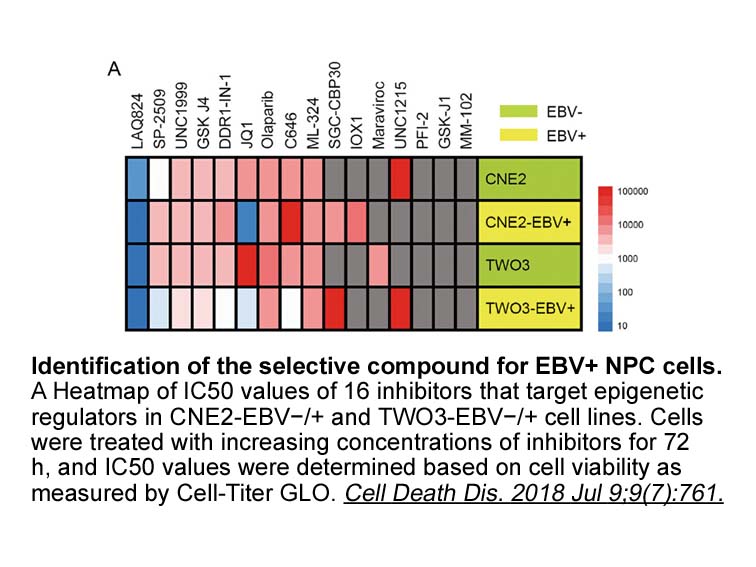
Heme oxygenase-1 inhibitors Historically, the first class of competitive HO-1 inhibitors was represented by MPs, heme analogs in which the central iron MM-102 australia of heme is exchanged by another element, such as zinc, cobalt, tin, or chromium. These molecules compete with heme for binding
-
The Hardy Weinberg equilibrium was
2022-01-18

The Hardy-Weinberg equilibrium was verified in all groups using the chi-square test. Using WINPEPI 11.65, the number of carriers and non-carriers of the Δ32 allele was compared between the groups through the Pearson's chi-square test with Yates's correction. Two-tailed Fisher's test was used when ap
-
Subcellular domains where Rac is
2022-01-18
Subcellular domains where Rac is active show limited Rho activity and vice versa (Fig. 4). This distinctive patterning in Rho activity is achieved via the downstream Rac effector Par6, an important part of the so-called Par polarity complex. In primary epithelium, the cytoskeleton and associated Rho
-
Using expression of TcMYH fused
2022-01-18
Using expression of TcMYH fused to GFP, it was observed that MYH is present in the nucleus and in the mitochondrion of T. cruzi (Fig. 5). It is known that MYH protein from human, rat and mouse exhibits both mitochondrial and nuclear localization (Ichinoe et al., 2004, Lee et al., 2004, Nishioka et a
-
For several parasites of veterinary importance there is
2022-01-18

For several parasites of veterinary importance, there is a growing body of evidence that resistance to ML is, at least in part, mediated by ABC transporters (P-glycoproteins) (Whittaker et al., 2017). P-glycoproteins (Pgps) are members of the ATP-binding cassette transporter family that are well kno
-
br Materials and methods br Results br Discussion Neurotrans
2022-01-18
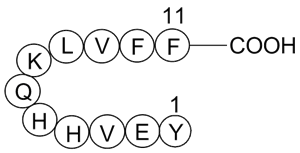
Materials and methods Results Discussion Neurotransmitter uptake is one of the most important aspects of synaptic transmission, it fact, the existence of a specific uptake system is one of the requisites that any neuroactive substance has to cover to be considered a neurotransmitter. It has
-
br Conflict of interest statement br
2022-01-18
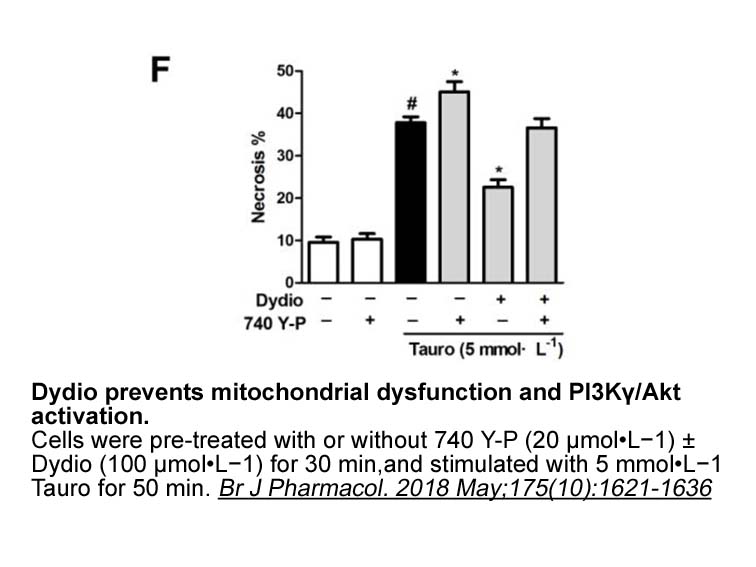
Conflict of interest statement Acknowledgments Introduction Hedgehog (Hh) signaling controls key steps of development in most tissues and organs of invertebrates and vertebrates (Briscoe and Therond, 2013, Ingham et al., 2011, Wilson and Chuang, 2010). The unique cellular composition and mo
-
br Results and discussion br Conclusion In summary we design
2022-01-18
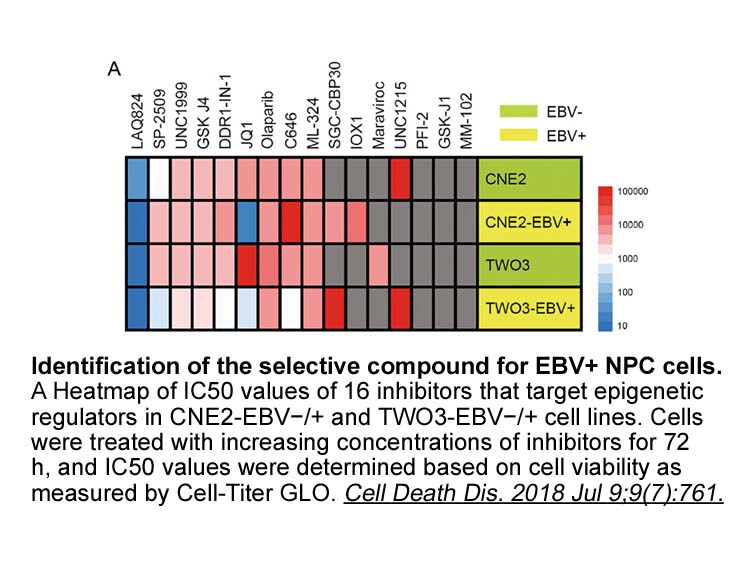
Results and discussion Conclusion In summary, we designed and discovered a series of novel GPR40 agonists containing 3,5-dimethylisoxazole with improved tPSA and ideal cLog P. Most of these compounds were confirmed as excellent GPR40 agonists in vitro. Especially, compound 11k exhibited robust
16328 records 517/1089 page Previous Next First page 上5页 516517518519520 下5页 Last page